
 by
by 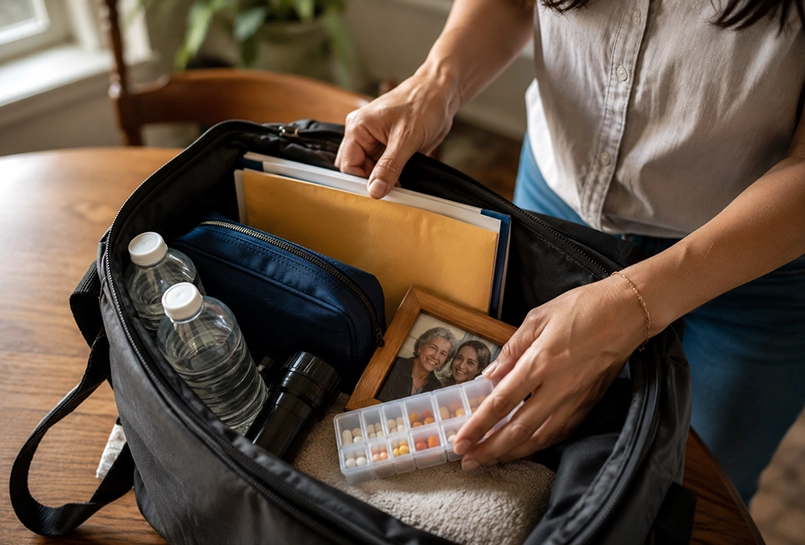
For families in New Orleans, hurricane season is a familiar part of life—but when an aging parent or loved one is involved, the stakes feel higher and the planning more complex. Older adults often face unique challenges during storms and evacuations, from managing medications and medical equipment to navigating mobility limitations, chronic health conditions, or memory loss.
The good news is that with thoughtful preparation well before a storm approaches, families can feel confident and calm rather than scrambling at the last minute.
This guide walks through a comprehensive approach to hurricane preparedness for seniors—covering everything from building a personal support network and emergency kit to navigating evacuation, medical needs, communication, and the recovery period after a storm passes.
Whether you live in New Orleans yourself or are coordinating care from out of town, this article is designed to help you build a plan that brings real peace of mind.
Why Hurricane Preparedness Looks Different for Seniors
A hurricane evacuation plan that works well for a healthy adult may not work at all for an aging parent. Mobility issues can make a quick departure difficult, especially if stairs, distance to a vehicle, long lines at shelters, or hours of travel are involved. For older adults who use walkers, wheelchairs, or who tire easily, the physical demands of evacuation alone can be significant.
Many seniors also rely on daily medications or medical equipment—oxygen concentrators, CPAP machines, dialysis, insulin that requires refrigeration—all of which require careful planning around power outages, supply shortages, and access to care in unfamiliar locations. A missed dose or a piece of equipment left behind isn’t just inconvenient; it can quickly become a medical emergency.
Beyond the physical considerations, hurricane season can be disorienting and emotionally taxing for older adults, particularly those living with dementia or other forms of cognitive decline. Disruptions to routine, unfamiliar environments, crowded shelters, and the general stress of evacuation can all take a toll—sometimes leading to increased confusion, agitation, or withdrawal. Chronic health conditions like heart disease, COPD, or diabetes can also be exacerbated by the stress, heat, and disrupted care that often accompany a major storm.
Recognizing these added layers—physical, medical, and emotional—is the first step toward building a plan that truly protects your loved one, rather than simply checking boxes on a generic preparedness list.
Step 1: Create a Personal Support Network
Before storm season begins, take time to identify everyone who might play a role in your loved one’s emergency plan—family members, close friends, neighbors, paid caregivers, or care managers. A strong support network means your loved one isn’t relying on just one person, which is especially important if that person is unavailable, out of town, or dealing with their own evacuation needs.
For each person in the network, think through specific roles:
- Who will provide transportation if your loved one doesn’t drive or their vehicle isn’t suitable for evacuation?
- Who will help pack the emergency kit and gather medications and documents?
- Who will check in by phone before, during, and after the storm?
- Who has a spare key and knows how to access the home if needed?
Register for Smart911
One of the most important steps any senior or person with medical needs can take is creating a free Smart911 profile. This profile helps the City of New Orleans know who may need extra assistance during an emergency, and it integrates directly with the city’s emergency alert system. It’s especially important to complete the medical information section if your loved one:
- Uses life support systems such as oxygen, a respirator, ventilator, dialysis, a pacemaker, or is insulin-dependent
- Has trouble walking or moving around, or uses a prosthesis
- Is blind, deaf, hard of hearing, or has trouble seeing
- Has speech, developmental, or mental health disabilities
- Uses a service animal
A Smart911 profile can be created online or by calling 3-1-1, and if your loved one isn’t comfortable doing this themselves, a family member, caregiver, or friend can register on their behalf.
Once your support network is established and registrations are complete, share copies of your emergency plan with everyone involved—including neighbors who may be able to offer immediate help—so there’s no confusion or scrambling when a storm is approaching.
Step 2: Build an Emergency Kit Tailored to Their Needs
A general emergency kit is a good starting point, but an older adult’s kit should go further, accounting for their specific health conditions, mobility needs, and daily routines. Consider building out the following categories well before hurricane season begins, so the kit is ready to grab at a moment’s notice.
Medications and medical supplies:
- A 7- to 14-day supply of all prescription medications, in their original labeled containers
- A written list of all medications, dosages, and the prescribing physician for each
- Pharmacy name and contact information, in case prescriptions need to be transferred or refilled elsewhere
- Extra supplies for chronic conditions—glucose monitoring supplies, inhalers, blood pressure monitors, etc.
Medical equipment and power needs:
- Backup batteries or portable chargers for hearing aids, oxygen concentrators, CPAP machines, or other electronic medical devices
- A cooler and ice packs for medications that require refrigeration, such as insulin
- Extra eyeglasses, hearing aid batteries, and any other sensory aids
Important documents:
- Copies of insurance cards (health, Medicare/Medicaid, supplemental)
- Photo ID and any guardianship or power of attorney documentation
- A written medical summary including diagnoses, allergies, and emergency contacts
- Physician names and phone numbers
Comfort and daily living items:
- Mobility aids—canes, walkers, or a spare set of wheels for a wheelchair if applicable
- A few days of clothing, including layers for changing weather
- Personal hygiene items
- A familiar blanket, photo, or small comfort object—particularly helpful for those with memory loss
General supplies:
- Non-perishable food and bottled water (enough for several days)
- Flashlights and extra batteries
- A battery-powered or hand-crank radio
- Cash, since ATMs and card readers may be unavailable during power outages
Taking the time to assemble this kit in advance—and reviewing it each year before hurricane season—means one less thing to worry about when a storm is approaching. Consider keeping the kit in a designated spot, such as a labeled bag by the front door, so it’s easy to grab quickly.
Step 3: Plan for Evacuation or Sheltering in Place
One of the most important—and sometimes most difficult—decisions families face is whether to evacuate ahead of a storm or shelter in place. According to NOLA Ready’s guidance, staying with friends or family outside the storm’s path is strongly preferred for seniors and people with medical needs—public shelters should generally be considered a last resort.
If evacuating:
- Stay with friends or family if at all possible, rather than relying on a public shelter
- Identify accessible transportation in advance. If your loved one doesn’t drive, who will pick them up, and do they have a vehicle suitable for any mobility equipment?
- If your loved one can’t evacuate on their own due to medical needs, they may be eligible for pickup assistance from the city—this is another reason a completed Smart911 profile matters, as city officials will use this information to identify and notify those who qualify for evacuation resources
- Map out the route in advance, including alternate routes in case of road closures, and identify rest stops along the way
- Pack the emergency kit, medications, and important documents as early as possible—don’t wait until the last minute
If sheltering in place:
Sometimes evacuation isn’t possible or appropriate—due to health conditions that make travel risky, or a storm that’s expected to be less severe. NOLA Ready’s sheltering guidance recommends preparing for extended power outages, high heat, and closed businesses, including pharmacies and doctors’ offices—all of which can be especially challenging for seniors. In these cases:
- Make sure the home is stocked with enough food, water, and medication for at least several days, ideally longer, since pharmacies may be closed for an extended period
- If your loved one relies on power for medical equipment, make sure this is documented in their Smart911 profile
- Identify a safe room within the home—typically an interior room away from windows
- Ensure backup power sources are charged and ready
- Confirm that someone will check in regularly throughout the storm
Watch for extreme heat after the storm:
Extended power outages often mean extended periods without air conditioning, and adults over 65 are especially vulnerable to heat-related illness. According to NOLA Ready’s heat safety guidance, it’s important to know the signs of heat-related illness—such as heavy sweating, dizziness, nausea, or confusion—and to have a plan for staying cool, whether that’s a battery-powered fan, a cooling center, or relocating to a location with power until utilities are restored.
Be aware of boil water advisories:
Boil water advisories are common after major storms, particularly if power outages affect water treatment facilities. NOLA Ready’s boil water guidance notes that anyone with open wounds or a weakened immune system should use boiled water for bathing during an advisory—an important consideration for seniors managing chronic health conditions or recovering from recent procedures. Keeping a supply of bottled water on hand can help avoid this issue altogether in the days immediately following a storm.
For those in assisted living or memory care communities:
If your loved one lives in a care facility, don’t assume the facility’s emergency plan will automatically cover everything you’d want. Ask specific questions well before hurricane season:
- Does the facility evacuate residents, and if so, to where?
- What is the timeline for evacuation decisions?
- How will families be notified and kept updated?
- What happens to residents’ medications and medical equipment during an evacuation?
- Is there a way to confirm your loved one’s safety after the storm?
Having these answers ahead of time—rather than discovering them in the middle of a crisis—can make an enormous difference in your peace of mind.
Step 4: Address Medical and Health Needs
Hurricane season is an excellent time to get ahead of medical logistics that could otherwise become major obstacles during a storm. A little proactive coordination can prevent a minor inconvenience from becoming a medical emergency.
Coordinate with physicians before storm season:
- Ask about getting an extra supply of essential medications, even if insurance typically only allows a 30-day fill at a time—many pharmacies and insurers make exceptions during hurricane season
- Discuss what to do if a dose is missed or delayed
- Ask whether any medications require special storage (like refrigeration) and how to manage that during a power outage
Keep a written medical summary on hand:
This document should be easy to grab and bring along, and should include:
- All current diagnoses and conditions
- A complete list of medications and dosages
- Known allergies
- Primary care physician and specialists, with contact information
- Emergency contacts and next of kin
This summary can be a lifesaver if your loved one needs care from an unfamiliar provider—whether at a shelter, a hospital along an evacuation route, or in a new city entirely.
Plan for power-dependent medical equipment: If your loved one relies on equipment like oxygen concentrators, CPAP machines, or other powered devices, talk to their medical equipment supplier about backup battery options well before storm season. Some suppliers offer backup batteries or generators specifically for hurricane preparedness. Know how long backup power will last, and have a plan for what to do if it runs out.
Know your route’s medical resources: Before evacuating, take a few minutes to identify hospitals, urgent care centers, and pharmacies along your evacuation route. If a medical issue arises during travel, knowing where to go—rather than searching in the moment—can save valuable time.
Step 5: Stay Connected and Informed
Communication can be one of the most stressful parts of hurricane season, especially for families who live far apart. A simple, agreed-upon communication plan can ease a lot of that anxiety.
Establish a check-in routine: Decide in advance who will check in with whom, and how often—before the storm, during it (if safe and possible), and after. For families spread across different time zones or locations, having one designated point person can help avoid duplicated efforts or, conversely, situations where everyone assumes someone else has checked in.
Stay informed through reliable sources: NOLA Ready, the City of New Orleans’ official emergency preparedness resource, provides real-time alerts, evacuation notices, and shelter information specific to the New Orleans area. Signing up for these alerts in advance ensures your family receives timely, accurate information rather than relying on rumors or social media.
Prepare for power and service disruptions: Cell towers and internet service can be unreliable or completely down for days after a major storm. A battery-powered or hand-crank radio allows your loved one (and you) to receive emergency broadcasts even without power or cell service. It’s also worth identifying a backup communication method—such as a landline, if available, or a pre-arranged meeting point—in case phones become unreachable.
For out-of-town family members: If you’re coordinating care from a distance, consider designating a trusted local contact—a neighbor, friend, or care professional—who can provide updates and act on your behalf if needed. Knowing someone is physically nearby and able to check on your loved one can provide significant reassurance when you can’t be there yourself.
Special Considerations for Loved Ones with Dementia or Memory Loss
Hurricane preparedness requires some additional thought for older adults living with dementia or other memory-related conditions, as the disruption of evacuation or storm-related changes can be particularly disorienting.
Maintain routine where possible: Even during evacuation, try to preserve familiar elements of your loved one’s daily routine—mealtimes, bedtime rituals, or simple activities they enjoy. Familiarity can help reduce anxiety and confusion in an unfamiliar environment.
Bring comfort items: A favorite blanket, a familiar photo, or a small treasured object can provide a sense of security and continuity. These small items often matter more than they might seem.
Use identification tools: Consider having your loved one wear or carry an ID bracelet, card, or tag with their name and emergency contact information. In the event of separation during a chaotic evacuation, this can make all the difference in quickly reuniting families.
Communicate calmly and simply: Changes in environment can be confusing or frightening. When explaining what’s happening—whether it’s traveling to a new location or staying somewhere unfamiliar—use simple, calm, reassuring language, and be prepared to repeat information patiently as needed.
Prepare caregivers at shelters or temporary locations: If your loved one will be cared for by others—even temporarily—provide them with basic information about dementia-related needs: their preferred name, any behaviors that might occur with stress, and strategies that help keep them calm.
After the Storm: Returning Home Safely
Once it’s deemed safe to return home, a few important steps can help ensure a smooth transition back to normal life.
Check the home before settling in: Before unpacking or resuming routines, check for:
- Structural damage, including roof, windows, and doors
- Standing water or signs of flooding
- Mold growth, particularly if the home lost power and air conditioning for an extended period
- Spoiled food in the refrigerator or freezer
- Medications that may have been affected by heat or lack of refrigeration—when in doubt, replace rather than risk using compromised medication
Re-establish medical routines quickly: Getting back to a normal medication schedule, meal routine, and any regular appointments as soon as possible can help your loved one regain a sense of stability. If any medications were lost, damaged, or used up during the evacuation, contact the pharmacy or physician promptly to arrange refills.
Watch for signs of stress or health changes: The disruption of evacuation—new environments, interrupted sleep, changes in diet, and general uncertainty—can take a toll on both physical and emotional well being. Keep an eye out for:
- Increased confusion or disorientation, especially in those with cognitive decline
- Changes in mood, such as increased anxiety, irritability, or withdrawal
- Physical symptoms that may have been overlooked during the chaos of evacuation, such as skin issues, dehydration, or medication side effects
Allow time for emotional recovery: Even when a storm causes minimal physical damage, the emotional impact of evacuation and uncertainty shouldn’t be underestimated—for your loved one or for you. Patience, reassurance, and a return to familiar routines can go a long way in helping everyone feel grounded again.
How a Geriatric Care Manager Can Help with Hurricane Preparedness
Planning for hurricane season can feel like a lot to manage—especially layered on top of work, family responsibilities, and the everyday demands of caregiving. A geriatric care manager can help lighten that load considerably.
Personalized planning: Rather than working from a generic checklist, a care manager can help create an emergency plan specifically tailored to your loved one’s health conditions, mobility level, medications, and living situation.
Coordination with providers: Care managers can communicate directly with physicians, pharmacies, and medical equipment suppliers to arrange extra medication supplies, backup power options, and necessary documentation ahead of storm season.
Liaison with care facilities: For loved ones in assisted living or memory care, a care manager can ask the detailed questions about evacuation protocols and follow up to ensure plans are actually in place—not just on paper.
Support for long-distance families: For families who live out of town, having a local care manager involved provides invaluable peace of mind. Someone is physically present, monitoring the situation, and ready to step in if plans need to change quickly. To learn more about how this kind of ongoing support works, take a look at our article on what a geriatric care manager does.
Let Us Help You Feel Prepared
Hurricane season doesn’t have to be a source of dread for your family. With a thoughtful, comprehensive plan in place—covering everything from medication management to evacuation logistics, communication, and recovery—you can feel confident that your loved one is genuinely prepared, no matter what the season brings.
If your loved one is living with memory loss, our memory care support services can help ensure their plan accounts for their unique needs and routines. And for families managing care from a distance, our guide on caring for elderly parents out of state offers additional guidance for staying connected and involved, even when you can’t be there in person.
If you’d like support creating an emergency plan for your loved one—or simply want peace of mind heading into hurricane season—we’re here to help.
Call: (504) 484-9530
Email: info@ccgno.com